

Have you ever stopped to notice how a small flower can bring a feeling of peace, happiness, and hope? A simple daisy growing in a garden or a field may seem ordinary, but many people find a deeper spiritual connection when they look at its beauty. This is why many believers search for the Daisy Meaning in the Bible and wonder if this gentle flower carries a message from God.
The Bible does not directly mention the daisy flower by name, but Scripture often uses nature to reveal spiritual truths. Flowers, plants, and gardens appear throughout God’s Word as reminders of His creativity, care, and faithfulness. Because of these biblical themes, many Christians connect the daisy with values such as purity, humility, hope, and the beauty of God’s creation.
The Daisy biblical meaning is not based on a specific Bible verse that explains the flower. Instead, it comes from understanding the lessons Scripture teaches through nature. Just as Jesus Christ used flowers and fields to explain God’s provision, a daisy can remind us to trust God, appreciate His blessings, and grow in faith.
For many believers, the Daisy flower meaning in Christianity represents a quiet reminder that God works through simple things. The flower’s delicate appearance can reflect a humble heart, while its ability to bloom after changing seasons can symbolize renewal, spiritual growth, and hope through God’s grace.
In this guide, we will explore the spiritual meaning of Daisy, its connection with Christian faith, biblical flower symbolism, the meaning of the name Daisy, and what this beautiful flower can teach us about God’s love. Let’s look deeper at how a simple daisy can point our hearts toward Scripture, prayer, and a closer relationship with God.
Is Daisy Mentioned in the Bible?
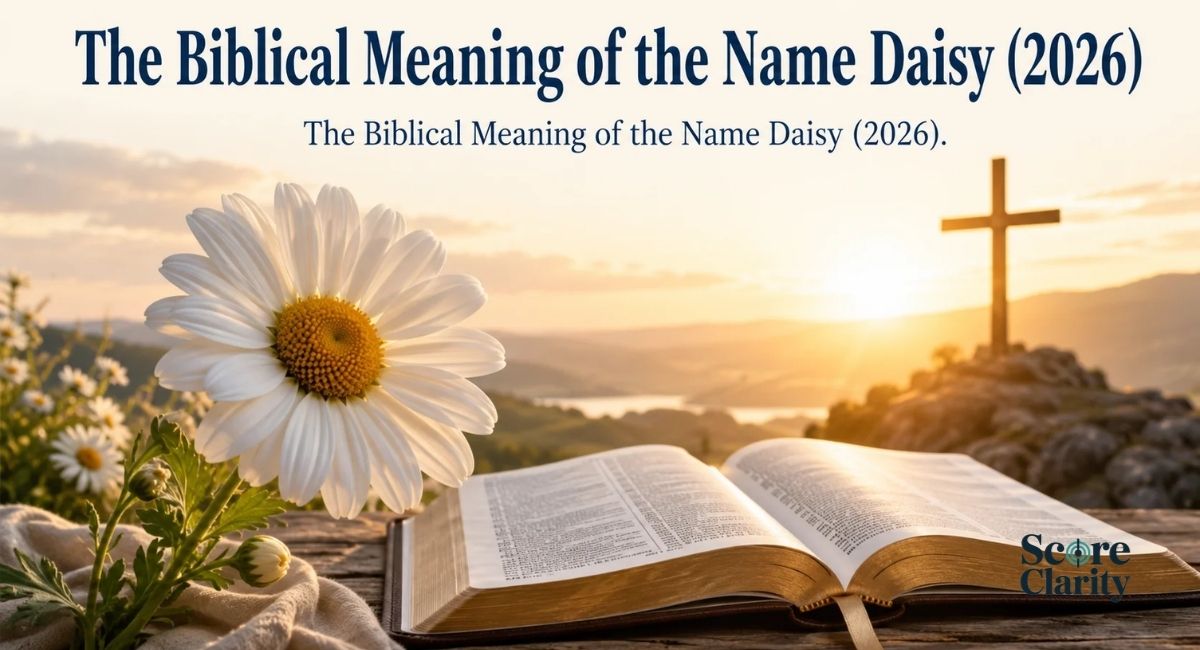
One of the most common questions people ask is: “Is Daisy mentioned in the Bible?” The simple answer is no. The daisy flower is not directly named anywhere in the Old Testament or New Testament.
The Bible mentions many plants and flowers, but the daisy is not among them. Scripture was written thousands of years ago in ancient cultures where different plants and flowers were common in the regions of Israel and the surrounding areas. The writers of the Bible used plants that were familiar to their original audiences.
The absence of the daisy in Scripture does not mean the flower has no spiritual meaning. Christians often learn spiritual lessons from God’s creation. The Bible itself encourages believers to observe nature and recognize God’s wisdom through it.
The book of Romans explains that creation reveals something about God:
“For since the creation of the world God’s invisible qualities—his eternal power and divine nature—have been clearly seen.” — Romans 1:20
This verse shows that nature can point people toward God’s character. A flower does not need to be specifically named in Scripture for someone to appreciate the spiritual lessons it represents.
The table below shows the difference between biblical flowers and symbolic Christian interpretations:
| Flower or Plant | Mentioned in the Bible? | Common Biblical Connection |
| Lily | Yes | God’s provision and beauty |
| Rose of Sharon | Yes (translation dependent) | Beauty and symbolism |
| Hyssop | Yes | Cleansing and purification |
| Olive tree | Yes | Peace, blessing, and abundance |
| Daisy | No | Purity, simplicity, hope (traditional symbolism) |
The Daisy in the Bible is therefore best understood as a symbolic reflection of biblical values rather than a direct biblical symbol.
When Christians talk about Daisy symbolism, they should remember that symbolism must always remain connected to God’s Word. A flower can inspire faith, but Scripture remains the foundation of Christian belief.
What Does Daisy Symbolize in the Bible?
Although the daisy is not directly mentioned in Scripture, many people connect the flower with biblical qualities. The Daisy symbolism comes from the flower’s appearance, growth patterns, and the spiritual ideas that Christians associate with God’s creation.
The small white petals and golden center often remind people of qualities that appear throughout Scripture, including purity, humility, joy, and hope. These connections are not commands from the Bible but reflections that help believers think about God’s character.
The following table explains common symbolic connections:
| Daisy Symbolism | Biblical Connection |
| Purity | A heart that seeks holiness and righteousness before God |
| Innocence | Childlike faith and trust in God |
| Humility | Living with a humble spirit before the Lord |
| Hope | Trusting God’s promises during difficult seasons |
| New beginnings | Spiritual growth and renewal through God’s grace |
| Simplicity | Finding contentment in God’s provision |
Daisy Symbolism of Purity and Innocence
One of the strongest connections people make with daisies is purity. The white petals are often associated with cleanliness and innocence.
In Christianity, purity has a deeper meaning than outward appearance. It refers to the condition of the heart. Jesus taught about the importance of having a sincere heart:
“Blessed are the pure in heart, for they will see God.” — Matthew 5:8
The Daisy flower meaning in Christianity can remind believers to pursue a life marked by honesty, love, and devotion to God.
Daisy Symbolism of Humility
Daisies are simple flowers. They do not stand above other plants with a dramatic appearance. Instead, they grow quietly and beautifully.
This simplicity connects with the biblical value of humility. Throughout Scripture, God encourages His people to walk humbly.
Micah 6:8 says:
“Walk humbly with your God.”
The Christian meaning of Daisy can therefore include a reminder that spiritual beauty does not come from pride or status. True beauty comes from a humble heart that follows God.
Daisy Symbolism of Hope and Renewal
Flowers bloom after seasons of cold and darkness. Because of this, flowers often represent renewal and new life.
For Christians, hope is deeply connected with God’s promises, especially the promise of salvation and eternal life through Jesus Christ. The resurrection of Jesus is the greatest example of renewal and victory over death.
The daisy can serve as a simple reminder of God’s ability to bring new beginnings.
Biblical Meaning of the Name Daisy
The Daisy name meaning is another reason people search for the connection between Daisy and the Bible. Many parents choose names because they want their children to carry meaningful values.
However, it is important to understand that Daisy is not a biblical name in the same way as names like Mary, John, David, or Sarah. The name Daisy does not appear in the Bible.
The name Daisy comes from the English word for the flower. It developed from the Old English phrase meaning “day’s eye,” referring to how the flower opens during the day and closes at night.
The biblical meaning of Daisy is therefore not a direct meaning found in Scripture. Instead, people often connect the name with biblical qualities such as:
| Quality | Biblical Connection |
| Purity | Living a holy life before God |
| Joy | Rejoicing in God’s blessings |
| Hope | Trusting God’s promises |
| Gentleness | Showing kindness and love |
| Growth | Developing spiritual maturity |
A person named Daisy can certainly live a life that reflects Christian values. The power of a name comes not only from its origin but also from the character of the person who carries it.
The biblical significance of Daisy comes from the values it may represent rather than from a specific biblical definition.
Daisy Meaning in Hebrew and Biblical Languages
Many people search for the Daisy meaning in Hebrew because biblical names often have Hebrew origins. The Hebrew language is important because much of the Old Testament was written in Hebrew.
However, Daisy does not have a Hebrew origin. The Hebrew meaning of Daisy is not a traditional biblical meaning because the name developed from English flower terminology.
There is no ancient Hebrew word that translates directly to “Daisy” as a personal name. Instead, Hebrew Scripture uses other words connected to flowers, plants, and creation.
Some biblical concepts related to flowers include:
| Biblical Concept | Meaning |
| Blossom | Growth and beauty |
| Garden | God’s blessing and abundance |
| Fruitfulness | Spiritual maturity and blessing |
| Planting | Growth and purpose |
While Daisy is not a Hebrew biblical name, the flower can still remind Christians of Hebrew Bible themes such as God’s relationship with creation, His provision, and His promises.
The important lesson is that not every meaningful Christian symbol must originate from the Bible. Believers can appreciate God’s creation while keeping Scripture as the final authority for faith and doctrine.
Spiritual Meaning of Daisy in Christianity
The spiritual meaning of Daisy is connected to the way many Christians see God’s fingerprints in nature. A daisy may appear small and simple, but it reflects the creativity and care of the Creator.
The Daisy spiritual symbolism often focuses on faith, humility, purity, and hope. These qualities are central themes in Christianity.
Jesus frequently used everyday examples from nature to teach spiritual truths. He spoke about seeds, fields, birds, vines, and flowers because ordinary things can point people toward deeper spiritual realities.
Daisy and God: Seeing Spiritual Lessons in Creation
A daisy can remind believers that God cares about even the smallest details of creation. If God takes care of flowers, Jesus taught that He also cares deeply for people.
Matthew 6:30 says:
“If that is how God clothes the grass of the field… will he not clothe you much more?”
This teaching connects with the Daisy and Christianity relationship. The flower becomes a reminder of God’s faithfulness.
Daisy Faith Meaning
The Daisy faith meaning can be understood as a reminder to trust God through every season of life. Just as flowers grow according to God’s design, believers are encouraged to trust His timing and guidance.
The Daisy Christian symbolism is not about worshiping the flower. Instead, it is about allowing creation to point the heart back to God, prayer, gratitude, and worship.
A simple daisy can remind someone of:
| Spiritual Lesson | Meaning |
| Faith | Trusting God’s plan |
| Hope | Believing in God’s promises |
| Grace | Receiving God’s kindness |
| Humility | Walking closely with God |
| Spiritual growth | Becoming more like Christ |
The Daisy flower’s spiritual meaning ultimately points beyond the flower itself. It encourages believers to recognize God’s beauty, care, and wisdom in everyday life
Daisy in Dreams: Biblical Meaning and Interpretation
Many people search for Daisy dream meaning because flowers in dreams can feel deeply personal and meaningful. A dream about a daisy may bring feelings of peace, happiness, hope, or curiosity. However, when looking at dreams from a biblical perspective, it is important to understand that the Bible does not give a specific meaning for dreaming about daisies.
The Daisy in dreams biblical meaning should be approached with wisdom and prayer. In Scripture, God sometimes used dreams to communicate important messages. For example, Joseph received dreams that revealed future events, and God gave wisdom through dreams to several people in the Bible. However, not every dream has a hidden spiritual message.
The Bible teaches believers to seek guidance from God’s Word and the Holy Spirit rather than depending only on personal interpretations. A dream about a daisy may encourage reflection, but it should always be tested against Scripture.
| Dream Symbol | Possible Spiritual Reflection |
| A blooming daisy | Growth, hope, renewal, or gratitude |
| A field of daisies | God’s creation, peace, and abundance |
| A white daisy | Purity, innocence, or a desire for spiritual peace |
| A dying daisy | A reminder of change, seasons, or dependence on God |
| Giving someone daisies | Love, kindness, encouragement, or blessing |
These interpretations are not biblical promises. They are reflections based on common symbolism and Christian thought.
Biblical Interpretation of Daisy Dreams
The biblical interpretation of Daisy dreams should focus less on the flower itself and more on what God may be teaching through reflection. Scripture encourages believers to seek wisdom:
“If any of you lacks wisdom, you should ask God, who gives generously to all without finding fault.” — James 1:5
A believer who dreams about a daisy might use that moment as an opportunity for prayer and spiritual growth. The dream may remind them to think about areas such as faith, forgiveness, humility, or gratitude.
The Daisy in dreams biblical meaning may also connect with biblical themes of growth. Just as a flower grows through different seasons, Christians also experience seasons of learning, waiting, struggle, and blessing.
The most important question is not, “What secret message does this flower contain?” but rather, “How can this experience draw me closer to God?”
Bible Verses Related to Daisy Symbolism
Although the Bible does not mention daisies directly, many passages discuss flowers, plants, and nature. These Scriptures help explain the broader idea behind biblical flower symbolism.
The Bible often uses creation to teach spiritual lessons. Flowers remind believers about God’s power, beauty, care, and the temporary nature of earthly things.
The following verses provide insight into the themes connected with the Daisy biblical significance:
| Bible Verse | Spiritual Connection |
| Matthew 6:28–30 | God cares for His creation and His people |
| Isaiah 40:8 | Earthly beauty fades, but God’s Word remains forever |
| Psalm 103:15–17 | Human life is temporary, but God’s love endures |
| Romans 1:20 | Creation reveals God’s power and nature |
| James 1:10–11 | Earthly beauty fades like flowers |
Matthew 6:28–30 — Flowers and God’s Provision
One of the strongest passages connected to flowers in the Bible is found in Jesus’ Sermon on the Mount.
Jesus said:
“See how the flowers of the field grow. They do not labor or spin.”
Jesus used flowers as an example of God’s care. He explained that if God provides for flowers, He will certainly care for His children.
This passage connects with the Daisy flower symbolism of trust and faith. A simple daisy growing in nature can remind believers that God knows their needs.
The lesson is not about the flower itself. The lesson is about the Creator behind the flower.
Isaiah 40:8 — The Beauty of Creation Is Temporary
Isaiah wrote:
“The grass withers and the flowers fall, but the word of our God endures forever.”
This verse creates an important biblical understanding of flowers. Their beauty is real, but temporary.
The Daisy spiritual significance can remind Christians that earthly things change, but God’s promises remain forever.
A flower blooms for a season, but God’s love, grace, and salvation through Jesus Christ continue eternally.
Romans 1:20 — Seeing God Through Creation
The natural world reveals God’s greatness. A flower’s design, colors, and growth process can inspire worship and gratitude.
The biblical meaning of flowers is often connected with recognizing God’s creativity. Nature does not replace Scripture, but it can point people toward the Creator.
A daisy can become a small reminder of a much bigger truth: God creates with purpose and beauty.
Is Daisy a Biblical Name?
The question “Is Daisy a biblical name?” is one of the most searched questions related to the topic. The answer is no. Daisy is not a name found in the Bible.
Biblical names usually come from Hebrew, Aramaic, or Greek backgrounds. Names such as David, Ruth, Mary, Peter, and John appear in Scripture because they belonged to people in biblical history.
The name Daisy developed from the English flower name. It became popular because of the beauty and simplicity associated with the flower.
However, a name does not have to appear in the Bible to carry positive meaning for a Christian family. Many modern Christian parents choose names based on qualities they hope their children will represent.
The biblical name Daisy idea comes from the values people associate with the flower rather than from biblical history.
| Daisy Quality | Christian Value |
| Brightness | Joy in God’s presence |
| Purity | A heart devoted to God |
| Gentleness | Showing Christ-like love |
| Beauty | Reflecting God’s creation |
| Growth | Spiritual maturity |
A person named Daisy can honor God through faith, character, kindness, and obedience. The meaning of a person’s life is always more important than the origin of their name.
Daisy Name Meaning, Personality, and Popularity
The Daisy name meaning comes from the daisy flower. The name has English roots and is connected with the phrase “day’s eye,” referring to the way the flower opens with daylight.
Over time, Daisy became a popular given name because it represents freshness, happiness, and natural beauty.
Although personality meanings connected with names are cultural ideas rather than biblical teachings, many people associate Daisy with positive qualities.
| Common Daisy Personality Traits | Description |
| Cheerful | Often connected with happiness and positivity |
| Kind | Associated with compassion and warmth |
| Creative | Linked with imagination and beauty |
| Gentle | Connected with softness and peace |
| Strong | Represents endurance and growth |
These qualities also connect with many Christian values, such as love, patience, humility, and kindness.
Daisy Name Origin
The Daisy name origin comes from the English language. It began as a flower name before becoming a personal name.
The flower itself belongs to a large group of plants known for their simple shape and bright appearance. Because daisies are found in many places around the world, the name became recognized internationally.
Daisy Name Popularity
Daisy has remained a popular name in many English-speaking countries, including the United States. Parents often choose it because it sounds gentle, classic, and joyful.
The name is especially popular among families who appreciate nature-inspired names. While Daisy is not specifically a Christian or biblical name, many believers choose it because the flower reminds them of God’s creation.
The connection between Daisy and Christianity comes from symbolism, not Scripture. A Christian named Daisy can still live a life centered on the Gospel, faith, prayer, and love.
FAQ’s
What is the most holy flower?
The lily is often considered one of the most holy flowers in Christianity because it symbolizes purity, holiness, and resurrection, especially connected with Jesus Christ.
What flower means gift from God?
The rose and lily are often associated with God’s blessings and divine gifts, representing love, grace, and beauty from God’s creation.
What does daisy mean spiritually?
Spiritually, the daisy symbolizes purity, innocence, hope, humility, new beginnings, and trust in God’s care.
What flower represents Jesus?
The lily is commonly associated with Jesus because it represents purity, resurrection, and the glory of God’s creation.
What does a daisy mean biblically?
The daisy is not directly mentioned in the Bible, but Christians often connect it with biblical themes like purity, humility, faith, and God’s creation.
Daisy flower meaning in Bible
The daisy flower’s meaning in the Bible is symbolic rather than direct, reminding believers of God’s beauty, provision, hope, and spiritual growth through creation.
Conclusion:
The Daisy Meaning in the Bible is a beautiful topic because it connects everyday creation with spiritual reflection. While the daisy is not directly mentioned in Scripture, it can still remind believers of important biblical truths.
The Daisy biblical meaning is best understood through themes found throughout the Bible, including purity, humility, hope, faith, and God’s care. The flower itself is not sacred, but it can point our hearts toward the Creator who made all things.
The Daisy flower meaning in Christianity is based on symbolism. It reminds many believers to appreciate simplicity, trust God’s timing, and recognize His blessings in ordinary moments.
The key lessons are simple:
| Truth | Meaning |
| God cares for creation | Every part of life matters to Him |
| Beauty is temporary | God’s Word lasts forever |
| Humility matters | Faith grows through dependence on God |
| Hope is powerful | God brings renewal and new life |
| Creation points to God | Nature can inspire worship and gratitude |
Whether you see a daisy in a garden, receive the name Daisy, or reflect on its symbolism, the flower can serve as a gentle reminder of God’s grace, love, and faithfulness.
The greatest message is not found in the flower itself. It is found in the God who created it. Through Scripture, prayer, and faith in Jesus Christ, believers can discover deeper meaning in even the simplest parts of creation.

🚀 SEO Expert | Helping Businesses Rank Higher & Get More Organic Traffic
I’m an SEO Specialist focused on improving Google rankings, increasing organic traffic, and generating quality leads. I provide keyword research, on-page SEO, technical SEO, content optimization, SEO audits, and high-quality link building tailored to your business goals.
If you’re looking to grow your website with proven SEO strategies and long-term results, let’s work together.